
 Phone
Phone Email
Email WhatsApp
 Facebook
 Youtube


Custom Women Hoodies Set Manufacturer: How Brands Develop Matching Sets That Actually Feel Coordinated
Custom Women Hoodies Set Manufacturer: How Brands Develop Matching Sets That Actually Feel Coordinated
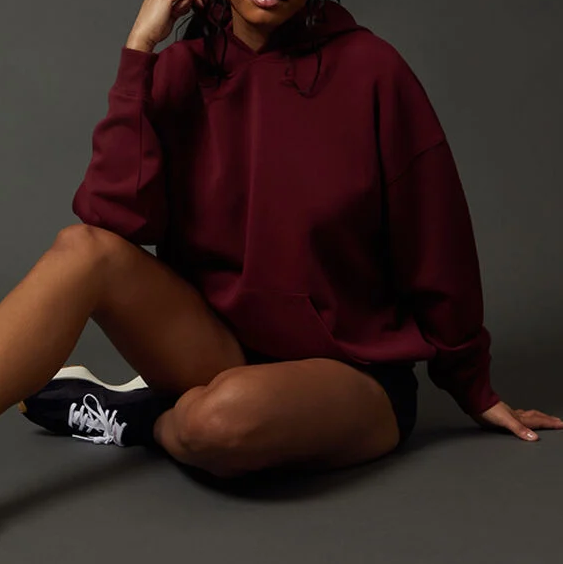
A women’s hoodie set can fail even when both individual pieces look good.
The hoodie may have a soft fabric, a clean logo and an attractive oversized fit. The sweatpants may also look correct when reviewed separately. But when the model wears them together, something feels wrong.
The hoodie may be too long for the rise of the pants.
The top may look relaxed while the bottoms feel too fitted.
The rib at the hoodie hem may be much tighter than the waistband.
The grey shade on the pants may appear slightly warmer than the hoodie.
The fabric may technically be the same, yet one piece looks heavier because of the construction.
This is a common development problem.
A matching set should not be created by approving a hoodie and a pair of pants independently and placing them in the same package. The two garments need to be developed as one visual and functional product.
For brands looking for a reliable custom women hoodies set manufacturer, this distinction is important. The manufacturer must understand the relationship between the upper and lower body, not only how to sew each garment.
A successful set needs coordinated fabric, color, fit, proportion, trims, branding and wash performance. When these parts work together, the customer sees one complete outfit. When they do not, the set feels like two unrelated garments that happen to share a similar color.
A Matching Set Should Begin with One Clear Wearing Situation
Before deciding whether the hoodie should be cropped, oversized or fitted, the brand should define how the customer will use the set.
Is it intended for travel?
Is it designed for relaxed weekends at home?
Will customers wear it to the gym and during daily errands?
Is it a streetwear product with a heavier silhouette?
Should the set feel soft and casual, or clean and structured?
A travel set may need lightweight warmth, practical pockets and enough room for long periods of sitting. A loungewear set may prioritize softness and unrestricted movement. A streetwear set may require heavyweight fabric, a stronger shoulder shape and wider pants. A women’s active lifestyle set may combine a cropped zip-up hoodie with high-rise joggers or leggings.
The wearing situation determines the product direction.
Without a clear use case, brands often mix incompatible ideas. The hoodie may look like streetwear while the pants feel like traditional gym clothing. One piece may prioritize warmth, while the other is too lightweight for the same season.
The first stage of development should therefore define the customer, climate, occasion and expected fit of the complete outfit.
The Hoodie and Bottoms Must Share the Same Design Language

Matching color is not enough to make two garments feel related.
The hoodie and bottoms should communicate the same design language through their proportions, seam details, trims and overall level of structure.
For example, an oversized drop-shoulder hoodie usually works better with relaxed joggers, straight-leg sweatpants or wide-leg bottoms than with extremely slim traditional sweatpants. A fitted cropped hoodie may work well with high-rise joggers, leggings or flared pants. A classic regular-fit hoodie can be paired with tapered sweatpants for a more commercial everyday set.
The design language should also be consistent in the details.
If the hoodie uses wide flat drawcords, the pants should not automatically use thin round cords unless the contrast is deliberate. If the hoodie has minimal tonal embroidery, a large printed logo on the pants may make the set feel unbalanced. If one piece uses clean hidden pockets and the other uses large utility pockets, there should be a clear reason.
Customers may not describe these details individually, but they recognize whether the set feels complete.
Hoodie Length Changes the Proportion of the Entire Outfit
The length of the hoodie should be developed together with the rise and silhouette of the bottoms.
A long oversized hoodie can cover much of the waistband and upper hip. This may work for a comfortable loungewear set, but it can make wide-leg pants feel visually heavy if the proportions are not balanced.
A cropped hoodie exposes more of the waistband. This puts greater attention on the waist construction, rise and drawcord position of the pants. If the hoodie is very short but the pants have a low rise, the outfit may not provide the coverage the customer expects.
For a balanced women’s set, brands should review:
- Hoodie body length
- Pants front and back rise
- Waistband height
- Hip ease
- Hoodie hem width
- Bottom-leg volume
- Sleeve width
- Overall visual balance
These measurements should not be approved in isolation.
The hoodie may appear correct on a table, and the pants may measure correctly according to the size chart. Only a full outfit fitting reveals whether the proportions work together.
An Oversized Set Needs Controlled Volume

Oversized women’s hoodie sets remain commercially strong because they combine comfort with a recognizable contemporary silhouette.
However, oversized should not mean that every measurement is simply increased.
The hoodie needs a controlled shoulder drop, body width, sleeve shape and length. The pants need enough volume through the hip and leg without becoming shapeless. The waistband still needs to feel secure, even when the rest of the garment is relaxed.
If both pieces contain too much uncontrolled volume, the customer can disappear inside the outfit. If the hoodie is oversized but the pants are only slightly relaxed, the set may look top-heavy.
A well-developed oversized set often uses volume strategically.
The hoodie may have a wide chest and dropped shoulder but a controlled body length. The pants may have a relaxed thigh with a tapered or elasticated ankle. Alternatively, wide-leg pants may be combined with a shorter hoodie to keep the overall proportion balanced.
The right solution depends on the brand’s customer and market position.
Cropped Hoodie Sets Need More Than a Shorter Body
A cropped hoodie set can work well for women’s activewear, gym lifestyle and fashion-focused loungewear collections.
But a cropped hoodie should not simply be a standard hoodie with several centimetres removed from the hem.
The body width, sleeve volume, pocket position and hem construction may all need adjustment. A kangaroo pocket that works on a regular-length hoodie can look crowded on a cropped style. A tight rib hem may cause the body to rise during movement. A very wide sleeve may overpower a short body.
The pants also need to support the cropped proportion.
High-rise joggers or wide-leg pants usually create more balanced coverage. The waistband becomes an important visual feature and needs clean construction. Drawcords, elastic tension and logo placement are more noticeable because the hoodie does not cover them.
The cropped top and high-rise bottom should overlap or separate according to the intended styling. That distance should be checked on different body types, not only on one model.
Fabric Should Be Chosen for the Entire Set

When brands develop a hoodie set, the same fabric is often used for both the top and bottom. This helps create color and texture consistency, but it does not automatically guarantee that the material is suitable for both garments.
A fabric that works well for an oversized hoodie may feel too heavy in wide-leg pants. A very soft fleece may create a comfortable top but lack enough recovery for the knees and seat area of the bottoms. A lightweight French terry may feel breathable but may not provide the structured silhouette shown in the design reference.
The fabric needs to perform across the entire outfit.
Brands should evaluate:
- Hand feel
- Fabric weight
- Drape
- Stretch and recovery
- Warmth
- Breathability
- Pilling resistance
- Knee-bagging risk
- Shrinkage
- Colorfastness
- Surface quality
- Suitability for printing or embroidery
The bottoms usually face more friction and stretching than the hoodie. Customers sit, bend and walk in them. A fabric that retains its appearance on the upper body may react differently at the knees, thighs and seat.
A professional custom women’s hoodie set manufacturer should assess the material from both perspectives.
French Terry and Brushed Fleece Create Different Collections
French terry is often selected for lighter hoodie sets. Its looped inner surface can provide comfort without the full warmth of heavy brushed fleece. It works well for transitional seasons, travel, gym lifestyle and markets with milder weather.
Brushed fleece provides a softer and warmer inside surface. It can make a set feel more substantial and comfortable in colder seasons.
Neither option is automatically better.
The correct choice depends on the product story.
A spring women’s set may use midweight French terry with a cropped zip-up hoodie and straight-leg pants. A winter loungewear set may use brushed fleece with a relaxed pullover hoodie and joggers. A heavyweight streetwear set may use dense cotton-rich fleece with a boxy hoodie and wide sweatpants.
The brand should consider the complete outfit weight. Wearing a heavy hoodie and heavy pants together can feel very different from touching one fabric swatch.
The Same Fabric Can Still Produce Different Shades

Using one fabric quality does not always guarantee perfect color matching between the hoodie and pants.
The two garments may be cut from different fabric rolls or dye lots. Fabric pile direction can change the way light reflects. Brushing can make one panel appear lighter or darker. Different pressing and sewing processes may also affect the surface.
For neutral colors such as grey, beige, cream, brown, olive and washed black, small differences can be particularly noticeable when the top and bottom are worn directly next to each other.
Bulk production should manage fabric lots carefully.
Whenever possible, matching tops and bottoms should be cut from the same approved color group. Roll inspection and shade grouping should happen before cutting. The production team should also control fabric direction so that the hoodie and pants reflect light consistently.
A set advertised as one color should not look like two close but visibly different shades.
Heather Grey Requires Special Attention
Heather grey is a common color for hoodie sets because it feels classic, comfortable and easy to style.
It is also a color that can reveal production differences.
The percentage and distribution of darker fibers can vary. Different fabric batches may appear warmer, cooler, lighter or more marled. Rib fabric may not match the body fabric exactly. Drawcords and embroidery threads can also shift the overall appearance.
For a heather-grey set, the manufacturer should compare:
- Hoodie body fabric
- Pants body fabric
- Hoodie rib
- Pants waistband or cuffs
- Drawcord color
- Sewing thread
- Embroidery thread
- Labels and trims
The goal is not always absolute uniformity. A slight rib contrast may be acceptable or even intentional. But the relationship should be approved rather than accidental.
Light Colors Need Opacity and Stain Control
Cream, white, pale pink, light grey, oatmeal and pastel colors are popular for women’s matching sets.
These shades can look clean and premium, but they need more testing.
Light-colored pants may become transparent under stretch, especially around the hip and seat. Pocket bags, seam allowances and underwear lines may become visible. Marks from production handling can also be more noticeable.
The hoodie may not present the same opacity problem, which is another reason the fabric should be evaluated separately on the upper and lower body.
Light-color development should include:
- Opacity testing
- Stretch testing
- Pocket-bag visibility
- Seam visibility
- Stain inspection
- Dye consistency
- Logo contrast
- Care and washing review
A fabric approved in black should not automatically be approved in cream without another sample.
Shrinkage Can Destroy the Balance of a Set
A hoodie and sweatpants may not shrink in exactly the same way, even when they use the same fabric.
The garments contain different seam structures, rib areas, elastics and pattern directions. The hoodie may lose body or sleeve length. The pants may become shorter through the inseam or change at the waist. Rib cuffs and waistband elastic may react differently from the body fabric.
If the hoodie becomes shorter while the pants rise remains stable, the relationship between the two pieces changes. If the pants become noticeably shorter, the set may no longer create the intended relaxed silhouette.
Wash testing should therefore evaluate both garments together.
The brand should compare:
- Hoodie body length
- Hoodie sleeve length
- Chest width
- Pants waist
- Front and back rise
- Hip width
- Inseam
- Outseam
- Leg opening
- Rib and elastic recovery
- Overall outfit proportion
The finished, washed measurements are what customers experience.
The Waistband Determines Whether the Set Feels Comfortable
The waistband is one of the most important parts of women’s sweatpants.
A hoodie can feel soft and relaxed, but if the waistband is uncomfortable, the entire set will be judged negatively.
The waistband needs to balance security and comfort. It should stay in place without digging into the body. It should recover after wear and washing. The drawcord should be useful rather than purely decorative.
Different waistband constructions include:
- Fully elasticated waistbands
- Elastic with internal drawcords
- Elastic with external drawcords
- Wide self-fabric waistbands
- Rib waistbands
- Fold-over constructions
- Smooth front waistbands with elastic backs
A wide waistband can feel supportive and create a clean appearance, but it may roll if the elastic or pattern is not correct. A narrow waistband can feel lighter, but it may create more pressure.
The waistband should also relate visually to the hoodie hem and cuffs. They do not need to be identical, but they should belong to the same product.
Joggers, Straight-Leg Pants and Wide-Leg Bottoms Need Different Development
The bottom silhouette changes the identity of the complete set.
Jogger Sets
Joggers create a familiar casual or athletic appearance. Elasticated ankle cuffs keep the silhouette controlled and work well for travel, loungewear and daily use.
The cuff should not be excessively tight, and the leg should have enough room for movement. A very loose thigh combined with a narrow cuff can create unwanted fabric gathering.
Straight-Leg Sets
Straight-leg sweatpants create a cleaner, more modern look. They can work well with regular or slightly cropped hoodies.
The leg opening and fabric drape need careful control. If the fabric is too soft, the pants may look more like sleepwear. If it is too stiff, the leg may not fall naturally.
Wide-Leg Sets
Wide-leg sweatpants can create a stronger fashion and streetwear direction. They often work well with cropped hoodies, shorter oversized tops or fitted zip-up styles.
The pants need enough structure to maintain the leg shape, but not so much weight that they become uncomfortable. The length should also be tested with the footwear the customer is likely to wear.
The same hoodie should not automatically be paired with every type of bottom without proportion adjustments.
Pockets Must Be Useful Without Adding Excess Bulk
Pockets are important in hoodie sets because customers often wear them for travel and daily activities.
The hoodie may include a kangaroo pocket, side pockets or zippered pockets. The pants may use side-seam pockets, slanted pockets, patch pockets or cargo details.
The pocket bag material should be selected carefully.
Using the main heavy fleece for every pocket layer can make the hip area bulky. A lighter jersey, mesh or woven pocket bag may create a cleaner result. However, it should still be strong enough for phones, keys and other everyday items.
Pocket placement affects the silhouette.
Pants pockets that open too far can gape. Pockets placed too low may make the hip look wider. A large kangaroo pocket can make a cropped hoodie appear crowded.
The complete set should be fitted with the pockets in use, not only when empty.
Drawcords and Hardware Should Be Coordinated
Drawcords, eyelets, zipper pullers and cord ends are small details, but they are repeated across a matching set.
If the hoodie and pants both use drawcords, the brand should decide whether they will match exactly or serve different functions.
A premium set may use tonal flat cotton cords with custom metal tips. A sports-inspired set may use round technical cords. A minimal set may hide the pants drawcord inside the waistband and remove it from the hoodie.
Hardware color should be consistent.
Using silver zipper teeth on the hoodie, gold cord ends on the pants and black eyelets without a design reason can make the product feel unresolved.
Custom hardware can strengthen brand identity, but it should not add unnecessary weight or discomfort.
Branding Should Connect the Two Pieces
A matching set gives brands several logo-placement options.
The hoodie may carry a chest embroidery, sleeve logo or back graphic. The pants may use a small thigh logo, hip embroidery or woven label.
The two pieces should not compete for attention.
If the hoodie carries a large front or back graphic, the pants may need more restrained branding. If the top is minimal, the bottoms can carry a clearer logo detail. Tonal embroidery can create a premium effect across both pieces without making the set look overly commercial.
Brands should also consider how the products will be sold.
If the hoodie and pants may be purchased separately, each item should still have enough brand identity on its own. If they are sold only as a set, the branding can be distributed across the outfit.
Logo application should be tested on the actual fabric. Embroidery density, print adhesion, heat-transfer marks and fabric stretch can all affect the result.
Embroidery Placement Should Reflect the Female Fit
A logo position that works on a unisex hoodie may not appear the same on a women’s cropped or fitted style.
Chest placement should consider the garment’s size, neckline, zipper and body length. On pants, the thigh or hip logo should be reviewed while the garment is worn, because fabric stretch and body shape can change the appearance.
Large embroidery can create stiffness, especially on soft fleece or French terry. Small lettering may become unclear on textured fabric.
For women’s sets, subtle branding often works well because the complete silhouette already provides strong visual value.
The logo should support the outfit rather than distract from its proportion.
Size Grading Must Keep the Top and Bottom Connected
A base-size set may look balanced, but the relationship between the hoodie and pants needs to remain consistent across the size range.
The hoodie and bottoms do not necessarily grade at the same rate.
As sizes increase, the brand may need to adjust:
- Hoodie body width
- Shoulder drop
- Sleeve width
- Body length
- Pants hip and thigh measurements
- Rise
- Waistband length
- Leg width
- Inseam or outseam
- Pocket position
- Logo placement
A cropped hoodie that looks balanced in size small may become disproportionately short in larger sizes if the body length is not graded thoughtfully. Wide-leg pants may need changes in rise and thigh distribution rather than only adding width at the side seams.
The goal is to preserve the design intention, not simply increase every measurement by a fixed number.
Top and Bottom Sizing May Need Flexibility
Not every customer wears the same size in tops and bottoms.
A woman may need a medium hoodie and large sweatpants, or the reverse. Brands should decide whether the set will be sold as one fixed size or whether customers can choose the top and bottom separately.
Selling fixed-size sets can simplify stock management and packaging, but it may limit fit flexibility. Allowing customers to mix sizes improves customer choice but creates more inventory complexity.
The manufacturing plan should reflect the sales model.
If the pieces are sold separately, the labels, packaging and product codes need to work independently. If they are sold only together, the size ratio and packing process should be clearly controlled.
This decision should be made before bulk production, not after the order has been completed.
Sampling Should Always Include the Complete Outfit
Approving the hoodie first and the pants several weeks later can lead to missed problems.
The brand should review at least one complete set in the same fabric, color and intended size.
The fitting should check:
- Overall silhouette
- Hoodie-to-waistband relationship
- Top and bottom color match
- Fabric weight across the full outfit
- Ease of movement
- Pocket position
- Drawcord and trim consistency
- Logo balance
- Sleeve and pants length
- Comfort while sitting
- Appearance after washing
The wearer should walk, sit, bend, raise the arms and use the pockets. A travel or loungewear set should be worn for longer than a few minutes.
Photographs should be taken from the front, side and back. The outfit should also be reviewed open and closed if the hoodie has a zipper.
The set should feel convincing as one product before bulk production begins.
Wash Testing Should Be Performed as a Set
The hoodie and pants should be washed together under the intended care conditions.
This reveals whether the colors remain coordinated and whether the two pieces change in compatible ways.
After washing, the brand should check:
- Shade difference
- Fabric surface
- Pilling
- Shrinkage
- Waistband and cuff recovery
- Zipper appearance
- Drawcord condition
- Logo durability
- Pocket shape
- Overall outfit proportion
A hoodie may remain stable while the pants develop knee bagging or shrink in length. The set should not be approved based only on the better-performing piece.
Customers will judge the complete outfit.
Bulk Production Must Keep Sets Together
When producing matching sets, fabric and production records should help keep compatible pieces together.
Important controls include:
- Fabric-lot separation
- Shade grouping
- Consistent pile or nap direction
- Coordinated cutting
- Matching rib and trims
- Logo placement checks
- Size identification
- Top and bottom quantity balance
- Set packing accuracy
If 500 hoodies and 500 pants are made but the size ratios do not match, the factory may be unable to pack the planned number of complete sets.
Production quantities should be checked by style, color and size before cutting begins.
For products sold as complete sets, the final inspection should compare the top and bottom together rather than checking them only in separate departments.
Packaging Should Follow the Sales Method
A women’s hoodie set can be packaged as one outfit or as two separate products.
Packing the pieces together can improve the customer’s unboxing experience and make order fulfillment easier for complete-set sales. However, each item should still be folded in a way that protects logos, zippers and surface quality.
Separate packaging may be more suitable if customers can mix sizes or buy pieces individually.
The package should clearly identify:
- Style
- Color
- Top size
- Bottom size
- Set contents
- Product code
- Care instructions
For soft neutral-colored sets, clean packaging is particularly important because dust and marks are more visible.
The presentation should support the product’s price position.
A Reliable Set Can Become a Long-Term Brand Product
One well-developed women’s hoodie set can support several future collections.
The brand may introduce:
- New seasonal colors
- Pullover and zip-up versions
- Cropped hoodie options
- Jogger and wide-leg bottoms
- Lightweight French terry editions
- Winter brushed-fleece editions
- Tonal embroidered collections
- Printed streetwear drops
- Shorts for warmer seasons
- Coordinated T-shirts and tank tops
A stable base fit makes expansion easier, but every material and silhouette change should still be tested.
Changing from joggers to wide-leg pants affects the complete proportion. Switching from French terry to heavyweight fleece changes the drape and seam bulk. Cropping the hoodie changes its relationship with the waistband.
A product family should evolve through controlled adjustments rather than simple copying.
Questions to Ask a Women’s Hoodie Set Manufacturer
Before beginning development, brands should ask practical questions.
Can the manufacturer develop the hoodie and bottoms as one coordinated outfit?
Can it provide French terry, brushed fleece, heavyweight cotton and cotton-blend options?
How does it control color consistency between the top and bottom?
Can it support joggers, straight-leg pants, wide-leg pants and matching shorts?
Can it develop cropped, oversized, zip-up and pullover hoodie styles?
Can customers choose separate top and bottom sizes?
How are fabric lots managed during cutting?
Can the factory test shrinkage and washing performance for the complete set?
Can it provide embroidery, printing, custom labels, drawcords and packaging?
How does it control top and bottom quantities by color and size?
Can it support repeat orders with comparable fabric and color?
Will the factory explain when the hoodie and pants proportions do not work together?
A useful manufacturer should think beyond two separate garments.
The factory should help the brand understand how every fabric, pattern and trim decision affects the full outfit.
Working with AOGU Activewear
AOGU Activewear supports international clothing brands with OEM and ODM production for hoodies, sweatshirts, sweatpants, shorts, yoga wear, activewear and related casualwear categories.
For brands searching for a custom women hoodies set manufacturer, AOGU can support:
- Fabric sourcing
- Fabric swatch approval
- Hoodie and pants pattern development
- Cropped, regular and oversized fits
- Pullover and zip-up hoodies
- Joggers, straight-leg and wide-leg sweatpants
- Custom colors
- Printing and embroidery
- Custom drawcords and trims
- Private labels
- Sample development
- Size grading
- Bulk production
- Quality inspection
- Custom packaging
Before sampling, fabric and color options can be reviewed with the client. After fabric, color and construction details are confirmed, samples can be produced for fit and workmanship approval.
Sampling for many projects can be completed in approximately one week once materials and specifications are ready. Bulk manufacturing commonly takes around 30 working days after sample approval, excluding the time required for material confirmation, color development and other pre-production work.
Depending on fabric and customization requirements, many AOGU hoodie-set projects can begin from approximately 100 pieces per color per style.
The objective is not simply to produce a hoodie and a pair of pants in the same fabric. It is to help the brand create a coordinated outfit that fits its customer, price point and market direction.
A women’s hoodie set looks simple because the customer sees only two garments.
Behind that complete outfit are many connected decisions.
The hoodie length must work with the pants rise. The top and bottom need compatible volume. Fabric should feel comfortable on both the upper and lower body. Colors must remain consistent. Rib, elastic, drawcords and hardware should belong to the same design story. After washing, the two pieces should still fit and look like a set.
Choosing the right custom women hoodies set manufacturer helps brands manage these relationships before they become production problems.
Customers may first notice the color or oversized silhouette. What makes them keep wearing the set is the way the whole outfit works together.
The hoodie feels comfortable without overwhelming the body.
The waistband stays in place.
The pants move naturally.
The colors match.
The fabric remains presentable after washing.
Each piece works alone, but the set feels better when worn together.
That is the real standard for a successful women’s hoodie set.
It should not look like two garments placed beside each other.
It should feel like one product from the beginning.